Welcome to Lansingerland

History

Bleiswijk

Bleiswijk is thought to have existed as early as 1100. Little can be said with certainty about the beginnings of Bleiswijk or its exact age. However, a historical description by Jacob Lois of the Schieland water board district dating from 1672 offers a clue. This document refers to Bleiswijk as a large village ‘having both high and low jurisdiction and therefore a seigniory and bailiwick.’


Like all villages in the Schieland area, Bleiswijk was initially surrounded by extensive marshlands. Peat extraction during the reclamation of the marshes brought prosperity to the village, the intensity of these mining activities, however, being such that it formed a bog lake during the mid-eighteenth century.  In 1771 it was therefore decided to turn this lake into a polder. Lansingerland, Bleiswijk

27 windmills were built to drain the lake. The monuments of ‘Het Bleiswijkse Verlaat’ (1770) and the surviving part of the ‘Molen met hellend scheprad’ (mill with inclined water wheel – 1772) were built during this period of reclamation. Electricity-powered pumping stations replaced drainage through windmills around 1911, causing almost all the windmills to disappear.


Today, Bleiswijk is home to 1,150 commercial firms. Its economic structure is dominated by the agro-business complex, the vegetable and fruit auction ‘The Greenery’ and the flower auction FloraHolland giving Bleiswijk its pivotal role in the horticultural industry in the western part of the Netherlands.


Bergschenhoek

Bergschenhoek became independent from Hillegersberg and had its own municipal government since. Before becoming its own municipality, Bergschenhoek fell under the jurisdiction of Ambacht Hillegondsberg and Rotteban in the Schieland region, which comprised the villages of Hillegondsberg and Bergschenhoek and the hamlet of Terbregge.

Lansingerland, Bergschenhoek 

On 24 July 1816, independent Bergschenhoek was officially granted permission by the High Council of Nobility to have its own municipal coat of arms, which is still in use. Since 14 January 1969, Bergschenhoek has also had an official municipal flag (yellow, red and white).


In recent years the municipality of Bergschenhoek saw its population boom. On 1 January 2006 the municipality had 16,590 inhabitants compared to 12,540 on 1 January 2000.


Berkel en Rodenrijs

The origins of Berkel en Rodenrijs date back to the year 963 and the area has undergone many transformations in the past centuries. The region consisted of peat bogs before it was made inhabitable. Lansingerland, Berkel en Rodenrijs The bog was mined for the production of peat,  typically creating large ponds.  

These ponds were drained during the 18th century. The reclaimed land was initially used for agriculture, with horticulture becoming dominant in later times.

Berkel en Rodenrijs is preparing itself for yet another phase of drastic changes in the years lying ahead: in the near future the landscape of some of the polders will be defined by residential areas, business zones and facilities. 


Berkel enRodenrijs, Bleiswijk en BergschenhoekThe emergence of Lansingerland

Merging three municipalities into the one powerful municipality of Lansingerland will help maintain the balance between economic and spatial interests. A single municipality has the strength to resist the pressures from higher levels of government.  Besides, it will ensure the preservation of the outer borders of Lansingerland more effectively.


A say in spatial developments

Major infrastructural developments are taking place around Bleiswijk, Bergschenhoek and Berkel en Rodenrijs. For instance, the construction of the HSL high-speed railway and the N470 motorway as well as modifications to the N209 motorway including its improved connection to the A12 motorway. Other developments include large-scale development of residential areas (‘Vinex’ development in Bergschenhoek and Berkel en Rodenrijs), business zones and dedicated sites for greenhouse horticulture. The influence of other interested and powerful players, such as the adjacent municipalities of Rotterdam and Zoetermeer as well as various players on the level of national government in these large-scale developments is felt. As separate municipalities, Berkel en Rodenrijs, Bergschenhoek and Bleiswijk were too insignificant to safeguard the interests of their inhabitants and entrepreneurs sufficiently amid these developments,  which called for a larger and unified local government structure.

Merging these three municipalities into the present single one, Lansingerland - now an equal and strong player - can from now on exert its influence on these developments.


Safeguarding the future for greenhouse horticulture

Greenhouse horticulture and related activities represent Lansingerland’s core economic activities. Our aim is to develop this area into a prime location from both a national and international perspective. Lansingerland Not only does this ambition require strong local government, but to an equal degree co-operation with the relevant branch of industry and national and international players, such as the national government and the EU. Smaller municipalities are hardly taken seriously. Thanks to the merger, Lansingerland can now boast to accommodate more than 1100 hectares (2,718.16 acres) of greenhouse horticulture. Today, Lansingerland is the country’s second largest greenhouse horticulture municipality, Westland taking first position.

Encouraging economic development

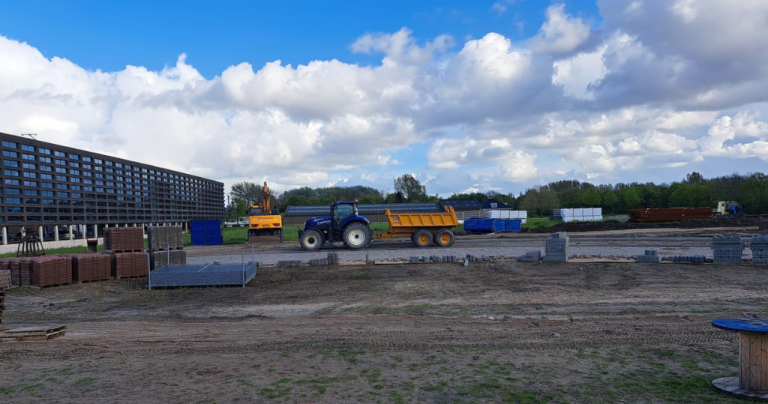
Lansingerland, Spoorhaven Lansingerland is presently developing various business areas. These areas will cater for a diversity of business activities to widen the range of economic activities and to reduce Lansingerland’s one-sided dependence on agriculture. Developing employment opportunities is crucial for the municipality to sustain population growth. The joining of forces also adds extra impetus to Lansingerland’s economic development.


Living in Lansingerland

Whereas market gardeners made up the bulk of the population in previous times, the residential developments in the post-war era attracted many newcomers who found employment in the surrounding region. With the number of businesses increasing, there are now also more opportunities to find a job close to home.Lansingerland, Bleiswijk Although growing, the towns in Lansingerland will preserve their small-scale character. Existing values are cherished while new developments are fitted in carefully. Lansingerland will retain its charms as a pleasant area for people to live in, work, shop and enjoy their leisure time. Newcomers are welcomed to join our friendly and hospitable community, and to join our efforts to build a municipality with a difference.


Developing Greenscapes

It is important to prevent the fragmentation of green zones and to fit them into the region as one connecting entity. There are some great opportunities to develop a coherent green zone in and around the municipality. Making use of those opportunities, however, requires a joint approach. Major players, such as the provincial and national governments, are currently developing various greenscape projects. Now a large municipality, Lansingerland has a greater say in the development of these projects.


The Green-Blue Meander

The Green-Blue Meander is a green and water-rich area meandering its way between some of the large cities in the western part of the province of Zuid-Holland. This green area has been designated for nature and recreation to preserve the balance between the city and the countryside. The Meerpolder in Lansingerland is situated at this Meander and will therefore be developed to facilitate walking, cycling and water recreation. The Westpolder and the Oudeland business site are located adjacent to the area of Oude Leede. This area offers many opportunities for nature and water management, and the development of a nature reserve combined with large-scale water recreation is now under consideration.

Lansingerland, Rottemeren